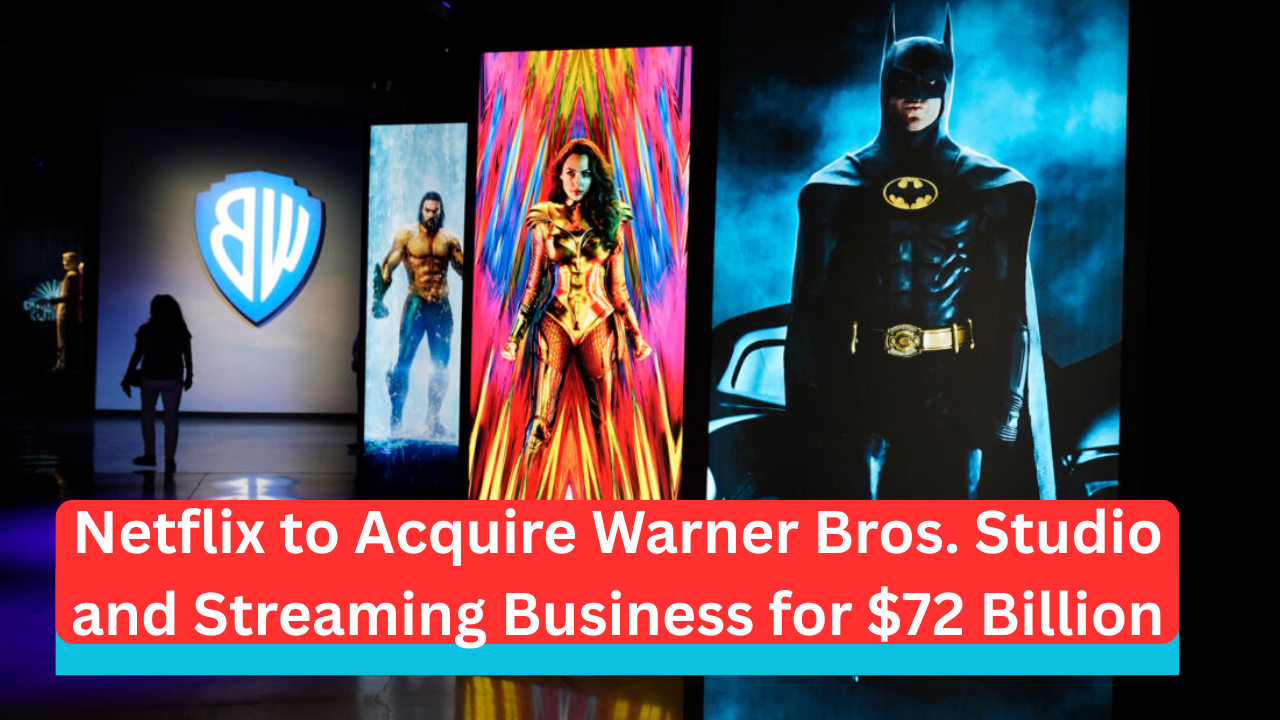
NEW YORK — Netflix announced Friday that it has reached a deal to acquire Warner Bros. Discovery in a massive $72 billion transaction, bringing together two of the most powerful names in television, film, and streaming.
If approved by regulators, the deal could significantly reshape the global entertainment industry.
The acquisition would unite Netflix, the world’s largest streaming platform, with Warner Bros.’ iconic movie and television assets, including HBO Max, DC Studios, and the legendary film library behind franchises such as Harry Potter.
The move would place two major streaming giants under one roof, a shift that is already raising serious antitrust concerns.
Industry analysts say the merger could dramatically change how content is produced, distributed, and priced for consumers.
A Streaming Powerhouse in the Making
If the deal clears regulatory hurdles, Netflix would gain access to Warner Bros.’ television and movie studios, while Warner’s premium HBO content would be added to Netflix’s already massive library.
Netflix’s original hits like Stranger Things and Squid Game would sit alongside HBO classics such as Game of Thrones and The Last of Us.
“Netflix is already the top streaming service today,” said Mike Proulx, vice president and research director at Forrester. “Combined with HBO Max, it would absolutely cement Netflix as the Goliath of the streaming industry.”
The transaction values Warner shares at $27.75 per share, giving the company a total enterprise value of $82.7 billion, including debt. The deal is expected to close within 12 to 18 months, following Warner’s previously announced separation of its cable television operations.
Notably, the deal does not include CNN or Discovery-branded networks, which will remain outside the transaction.
Will Netflix and HBO Max Merge Into One Service?
One of the biggest questions surrounding the deal is whether Netflix and HBO Max will remain separate platforms or eventually merge into a single, mega streaming service.
Proulx said either option could benefit consumers in the short term. A combined offering might result in bundle pricing or a single subscription bill, which could provide relief as streaming costs continue to rise and households struggle to manage multiple subscriptions.
Netflix said the addition of HBO and Warner content would allow the company to offer “even more high-quality titles” while optimizing subscription plans for users.
Still, many experts warn that less competition could eventually lead to higher prices and fewer content choices over time.
Antitrust and Industry Concerns Grow
The proposed merger is expected to face intense scrutiny from regulators, particularly over its impact on competition in streaming and film production.
Critics argue that combining Netflix with Warner Bros. could create an entertainment giant with too much control over content distribution, talent, and pricing. Some also fear job losses across studios, production teams, and creative departments.
Labor groups and industry watchers have raised concerns that consolidation at this scale could reduce opportunities for filmmakers and limit creative diversity.
What It Means for Movie Theaters
The deal also has major implications for theatrical releases. Netflix has traditionally focused on streaming-first distribution, while Warner Bros. has long been a major supporter of cinema releases.
Under the proposed agreement, Netflix said it would continue theatrical releases for Warner Bros. films and honor existing contracts. This marks a noticeable shift for Netflix, which has typically limited theatrical runs to awards-qualifying screenings.
Netflix has experimented with theaters in recent years, including limited runs for awards contenders and special events such as sing-a-long screenings and upcoming theatrical showings tied to the final season of Stranger Things.
“Our mission has always been to entertain the world,” said Ted Sarandos, Netflix’s co-CEO. He added that the merger would give audiences “more of what they love.”
David Zaslav, CEO of Warner Bros. Discovery, said the deal would ensure that Warner’s stories “continue to reach audiences everywhere for generations to come.”
Strong Pushback From Theater Industry
Not everyone is convinced. Cinema United, a trade group representing more than 30,000 movie screens in the U.S. and 26,000 internationally, came out strongly against the deal.
The group warned that Netflix’s business model does not support traditional movie theaters and could lead to widespread closures.
“Netflix’s model is fundamentally opposed to theatrical exhibition,” said Michael O’Leary, CEO of Cinema United. “If this deal goes through, theaters will close, communities will suffer, and jobs will be lost.”
The organization described the proposed merger as an “unprecedented threat” to the global movie exhibition business.
What Happens Next
The acquisition now enters a long regulatory review process, where antitrust authorities will evaluate its potential impact on competition, consumers, and workers. Approval is far from guaranteed, and the deal could face delays or demands for concessions.
If approved, the merger would mark one of the largest media deals in history and signal a new phase in the ongoing consolidation of the entertainment industry.
For now, investors, creators, and viewers alike are watching closely. The outcome could redefine how movies and television are made, distributed, and consumed in the streaming era.